
One of the hardest parts of being a mom to a nonverbal child.
The last few weeks have been some of the hardest we’ve experienced with Emma. And if you’ve followed our journey for a while, you know that’s saying a lot.
Emma has been through multiple surgeries, hospital stays, infections, and more than any child should ever have to endure.
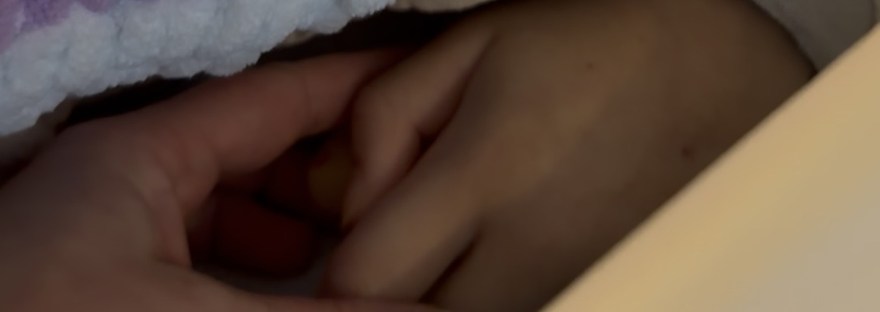
Right now, we’re back in the hospital, and once again, I’m sitting beside her bed, holding her hand, wishing more than anything that she could just tell me how she’s feeling.
I think sometimes we take for granted something as simple as our children being able to tell us when something hurts.
“My belly hurts.”
“My head hurts.”
“I don’t feel good.”
Emma can’t do that.
She can’t tell me where the pain is, how bad it is, or whether something feels different from yesterday.
And when you’re dealing with a child who has complex medical needs, that can be terrifying.
Learning to Listen Without Words
Over the years, I’ve learned to recognize the smallest changes in Emma.
The way she moves. The sounds she makes. Her facial expressions. Her energy level. The way she reacts when something isn’t right.
I know when she’s not acting like herself.
But knowing something is wrong and knowing exactly what is wrong are two very different things.
Sometimes I can tell she’s uncomfortable, but I don’t know whether it’s her stomach, her head, or something else entirely.
And that’s the part that breaks my heart.
I can comfort her. I can hold her. I can advocate for her. But I can’t take away the frustration of not knowing exactly what she’s experiencing.
Being Her Voice
One of the biggest responsibilities I have as Emma’s mom is being her voice.
When we walk into a doctor’s office or hospital, I have to explain things she can’t.
I have to tell people what her normal behavior looks like, what seems different, and what I’ve noticed at home.
Sometimes that means repeating myself. Sometimes it means asking more questions. Sometimes it means continuing to express concerns even when I don’t have the medical terminology to explain what I think is wrong.
Because I know my daughter.
That doesn’t mean I always know what’s medically happening. I don’t.
But I know Emma, and I know when something about her isn’t right.
These past few weeks have reminded me just how important it is for parents and caregivers of nonverbal children to be heard.
Our children may not be able to explain their symptoms, but that doesn’t mean they aren’t communicating.
We just have to know how to listen.
The Part People Don’t Always See
People see the surgeries, the hospital pictures, and the medical equipment.
What they don’t always see is the constant worry.
Wondering whether she’s in pain.
Wondering if we’re missing something.
Wondering whether she’s scared or uncomfortable and can’t tell us.
Wondering if there’s something else I should be doing.
And then there’s the guilt of having to divide my time between Emma and my other three girls, who need their mom, too.
It’s exhausting in ways that are difficult to explain.
But even in the middle of all of this, Emma is still Emma.
She’s still the little girl who makes us laugh, who loves being home, and who has her own way of showing us exactly what she wants.
Her medical needs are a huge part of our lives, but they aren’t all that she is.
Why I’m Sharing This
I started sharing our experiences because I wanted to help other families.
Not because I want anyone to feel sorry for us.
I want parents to know about resources that might make their lives easier. I want them to know they’re not the only ones asking questions, searching for answers, or trying to figure things out as they go.
And lately, I’ve been thinking a lot about how we can do more for children like Emma.
Children who can’t always tell someone they’re hurting.
Children who rely on other people to recognize when something is wrong.
Children who deserve to have their needs understood and their safety taken seriously.
I don’t have all the answers, and right now my focus is getting Emma healthy and bringing her home.
But I do know that this experience has made me think differently about how we advocate for children who cannot speak for themselves.
And I hope that someday, what we’ve learned through Emma’s experiences can help make things better for other families.
For now, I’ll keep sitting beside her, holding her hand, watching for those little signs, and doing everything I can to make sure she’s heard.
Because Emma may not have a voice, but she has so much to say.
And I’ll always do my best to make sure someone is listening.


