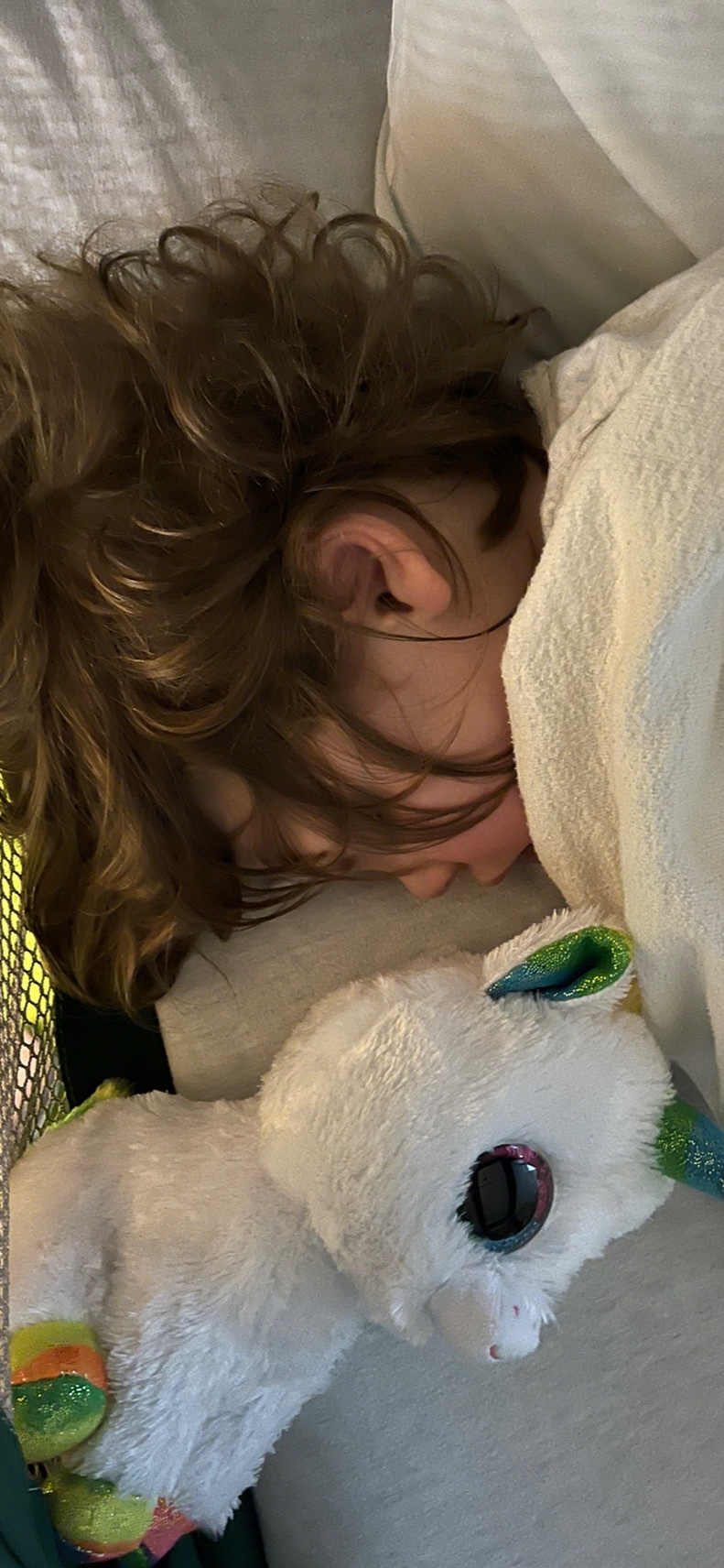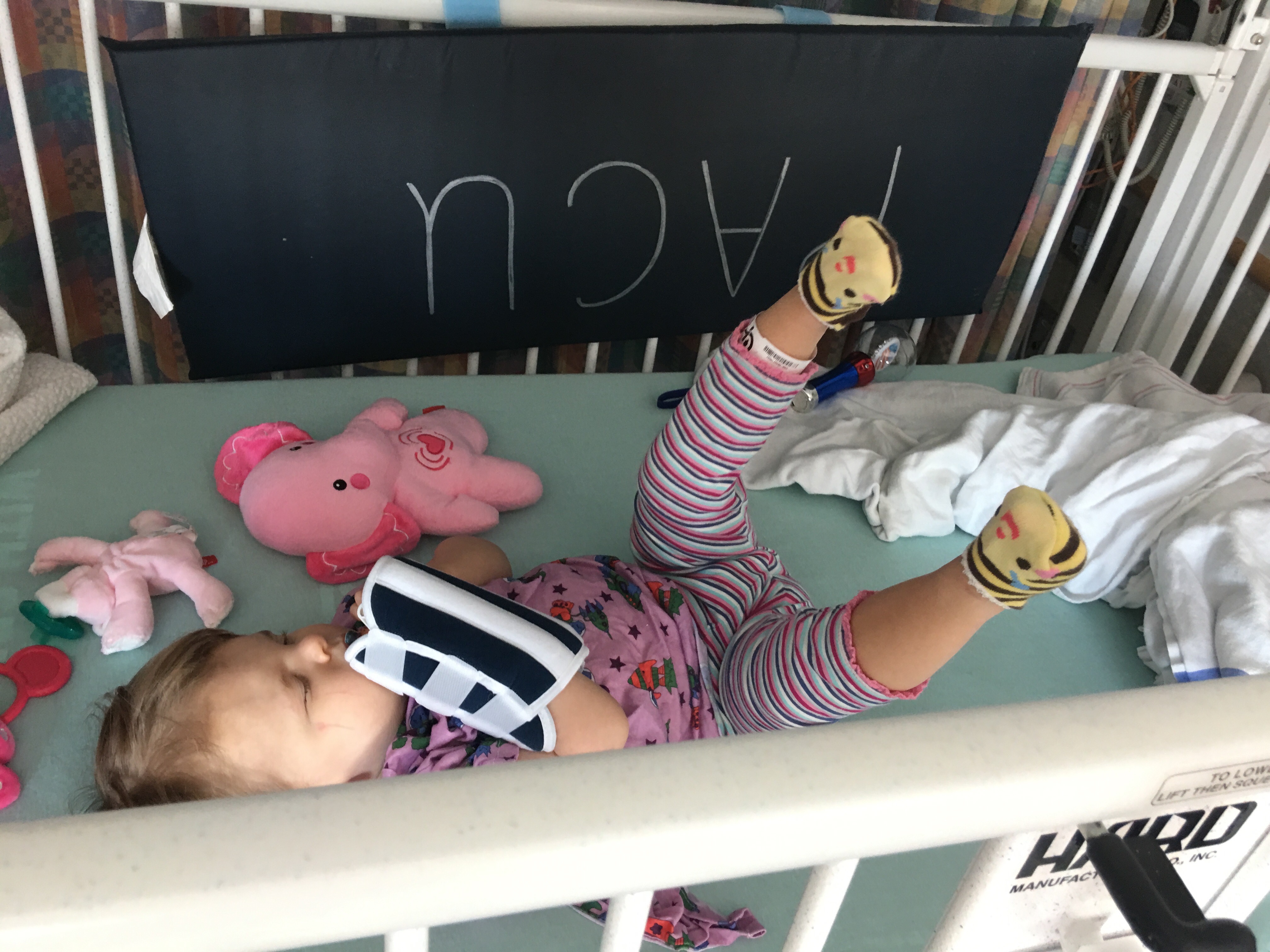
A mother holding her daughter Emma's hand during a hospital stay.
Children with disabilities

When Your Child Can’t Tell You What Hurts

One of the hardest parts of being a mom to a nonverbal child.

The last few weeks have been some of the hardest we’ve experienced with Emma. And if you’ve followed our journey for a while, you know that’s saying a lot.

Emma has been through multiple surgeries, hospital stays, infections, and more than any child should ever have to endure.

Right now, we’re back in the hospital, and once again, I’m sitting beside her bed, holding her hand, wishing more than anything that she could just tell me how she’s feeling.

I think sometimes we take for granted something as simple as our children being able to tell us when something hurts.

“My belly hurts.”

“My head hurts.”

“I don’t feel good.”

Emma can’t do that.

She can’t tell me where the pain is, how bad it is, or whether something feels different from yesterday.

And when you’re dealing with a child who has complex medical needs, that can be terrifying.

Learning to Listen Without Words

Over the years, I’ve learned to recognize the smallest changes in Emma.

The way she moves. The sounds she makes. Her facial expressions. Her energy level. The way she reacts when something isn’t right.

I know when she’s not acting like herself.

But knowing something is wrong and knowing exactly what is wrong are two very different things.

Sometimes I can tell she’s uncomfortable, but I don’t know whether it’s her stomach, her head, or something else entirely.

And that’s the part that breaks my heart.

I can comfort her. I can hold her. I can advocate for her. But I can’t take away the frustration of not knowing exactly what she’s experiencing.

Being Her Voice

One of the biggest responsibilities I have as Emma’s mom is being her voice.

When we walk into a doctor’s office or hospital, I have to explain things she can’t.

I have to tell people what her normal behavior looks like, what seems different, and what I’ve noticed at home.

Sometimes that means repeating myself. Sometimes it means asking more questions. Sometimes it means continuing to express concerns even when I don’t have the medical terminology to explain what I think is wrong.

Because I know my daughter.

That doesn’t mean I always know what’s medically happening. I don’t.

But I know Emma, and I know when something about her isn’t right.

These past few weeks have reminded me just how important it is for parents and caregivers of nonverbal children to be heard.

Our children may not be able to explain their symptoms, but that doesn’t mean they aren’t communicating.

We just have to know how to listen.

The Part People Don’t Always See

People see the surgeries, the hospital pictures, and the medical equipment.

What they don’t always see is the constant worry.

Wondering whether she’s in pain.

Wondering if we’re missing something.

Wondering whether she’s scared or uncomfortable and can’t tell us.

Wondering if there’s something else I should be doing.

And then there’s the guilt of having to divide my time between Emma and my other three girls, who need their mom, too.

It’s exhausting in ways that are difficult to explain.

But even in the middle of all of this, Emma is still Emma.

She’s still the little girl who makes us laugh, who loves being home, and who has her own way of showing us exactly what she wants.

Her medical needs are a huge part of our lives, but they aren’t all that she is.

Why I’m Sharing This

I started sharing our experiences because I wanted to help other families.

Not because I want anyone to feel sorry for us.

I want parents to know about resources that might make their lives easier. I want them to know they’re not the only ones asking questions, searching for answers, or trying to figure things out as they go.

And lately, I’ve been thinking a lot about how we can do more for children like Emma.

Children who can’t always tell someone they’re hurting.

Children who rely on other people to recognize when something is wrong.

Children who deserve to have their needs understood and their safety taken seriously.

I don’t have all the answers, and right now my focus is getting Emma healthy and bringing her home.

But I do know that this experience has made me think differently about how we advocate for children who cannot speak for themselves.

And I hope that someday, what we’ve learned through Emma’s experiences can help make things better for other families.

For now, I’ll keep sitting beside her, holding her hand, watching for those little signs, and doing everything I can to make sure she’s heard.

Because Emma may not have a voice, but she has so much to say.

And I’ll always do my best to make sure someone is listening.

Children with disabilities

Some days feel heavier than others

Today was one of those days.

I was about to leave to pick the girls up from camp, and before I could even get her and Av into the car, I was cleaning up a huge mess. Then halfway to camp, I had to pull over because Emma needed seizure intervention.

And somewhere between the mess, the rushing, the worry, and trying to keep everyone else going, I caught myself thinking, Why does it feel like I’m being punished?

I’m not sharing this because I need anyone to feel sorry for me. I’m sharing it because sometimes this is what our life looks like.

It’s messy. It’s exhausting. It’s unpredictable.

And sometimes I just need to admit that I’m tired of being strong because I feel as if I’m being punished.

Tomorrow I’ll get up and do it all again. But today, I’m allowed to say that today was really, really hard. ❤️

Children with disabilities

Grief

I am carrying a grief that doesn’t have a funeral.

People recognize grief when someone dies.

But there is another kind of grief—the grief of the life that I imagined.

The spontaneous family outings.

The conversations that I thought I’d have with Emma.

The dinners with my husband.

The vacations that feel impossible.

The freedom to leave the house without planning for every possibility.

That grief is real too.

And because it’s ongoing, people don’t always see it.

But it’s there.

Children with disabilities

Breakthrough seizures

Emma has really been hit hard lately. She had a shunt revision in February, norovirus in March and the flu and ear infection in April. Her body just couldn’t handle it anymore and the seizures finally won. Tuesday night Emma had breakthrough tonic clonic seizures that landed her back at Nemours. My poor baby can’t catch a break. Her life and mine are exhausting. I feel helpless and there is nothing I can do to change this. I am slowly feeling defeated and less optimistic about our future. The realization that this is our life makes me feel as if I’m in mourning. No, thankfully Emma is ok but any sense of normalcy of what I thought life would or could be, is dead. I’m absolutely terrified to go on vacation or leave Emma alone with anyone but her nurse. We can’t go to dinner or the movies. Emma’s medical diagnosis’ prevent our entire family from being “normal”. Emma has made me and my husband better people but at the end of the day I didn’t sign up for this. Emma didn’t and neither did her two sisters. I can’t help but resent anyone who has a different life than us. Anyone who can go out to eat as a family or take a trip to the beach without weighing the pros and cons and always concluding that there are more cons. It’s not worth it. This is not fair and I know “it could always be worse” but why should it? Why should it be worse? Why can’t I say “it could always be better!”? For anyone who resents their life sometimes please know you’re not alone. I love my daughter and will and have always done anything I can for her but that doesn’t mean I can’t help but dream about what life would be like if things were different. Just for a moment. Just while I sleep.

Children with disabilities

Weighted Blankets

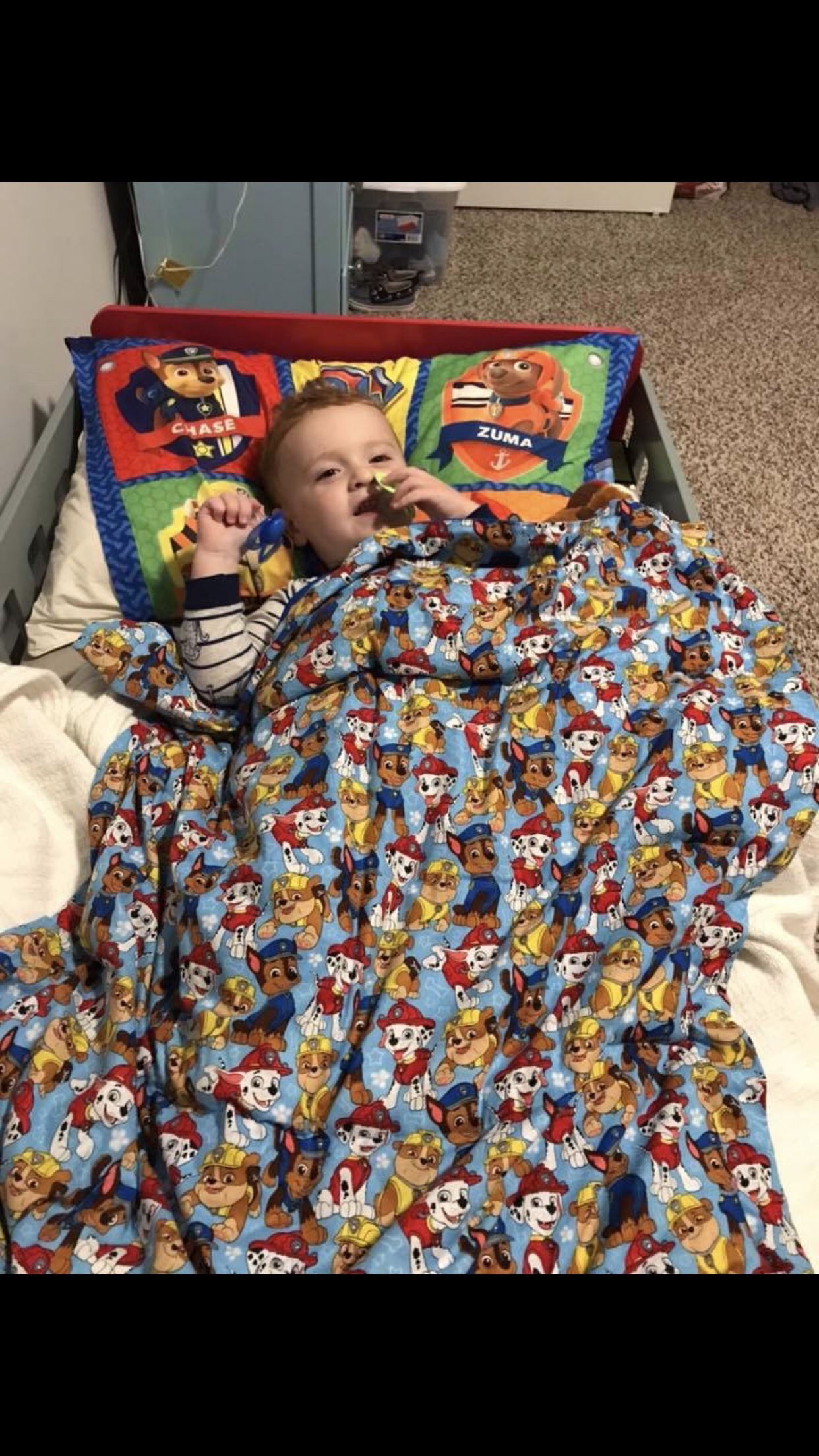
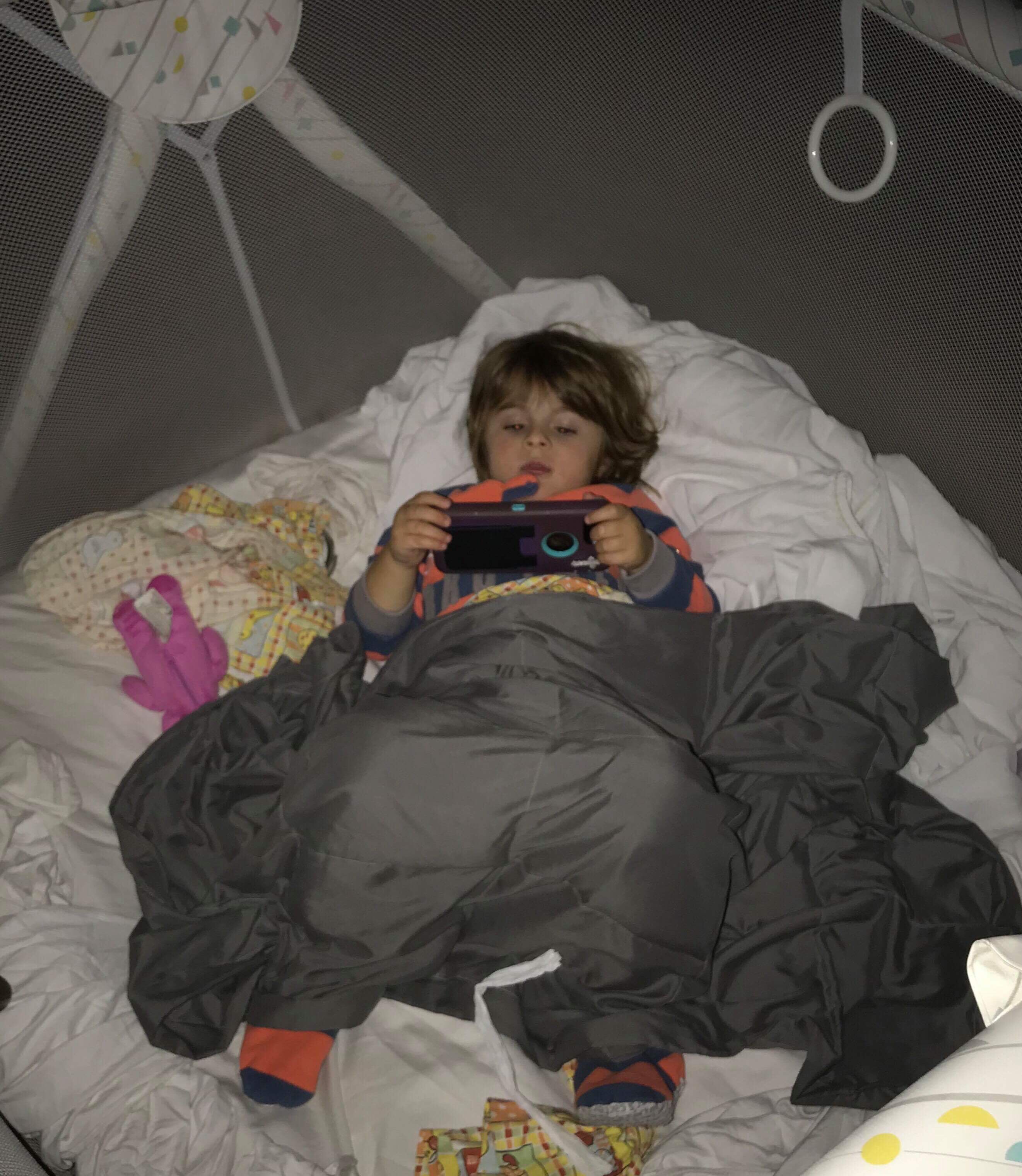
Weighted blankets can work wonders for children with sensory issues, anxiety or issues with sleep. The purpose of a weighted blanket is to spread weight evenly across the body, mimicking the soothing effects of a hug. It reduces stress, improves mood and can promote sleep.

Although they work for some kids, not every kid will experience the same benefits or results. There is no guarantee of success.

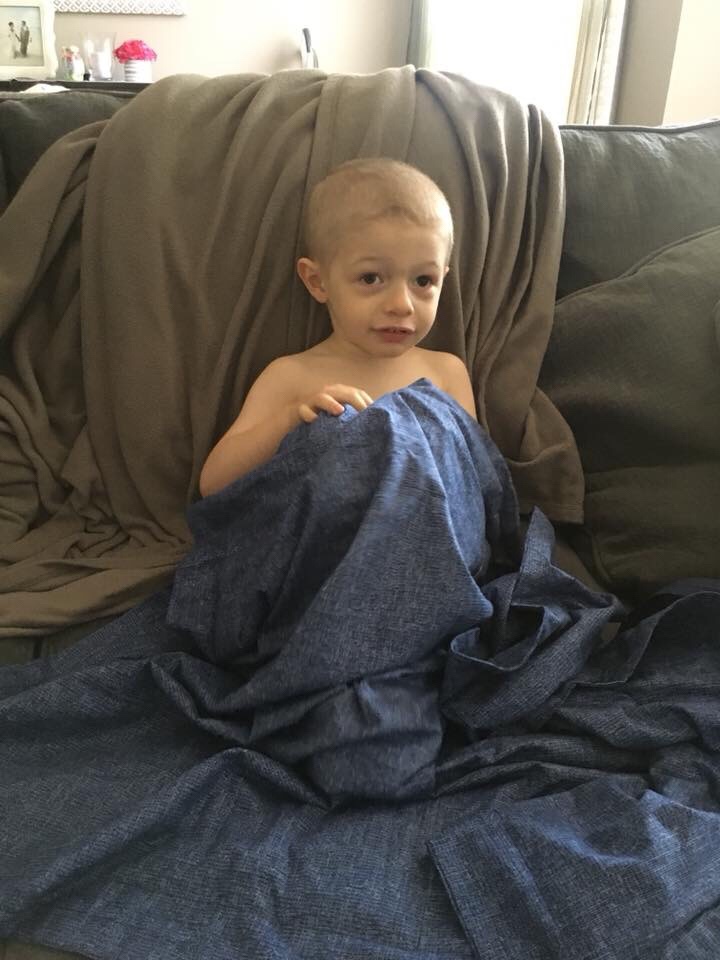
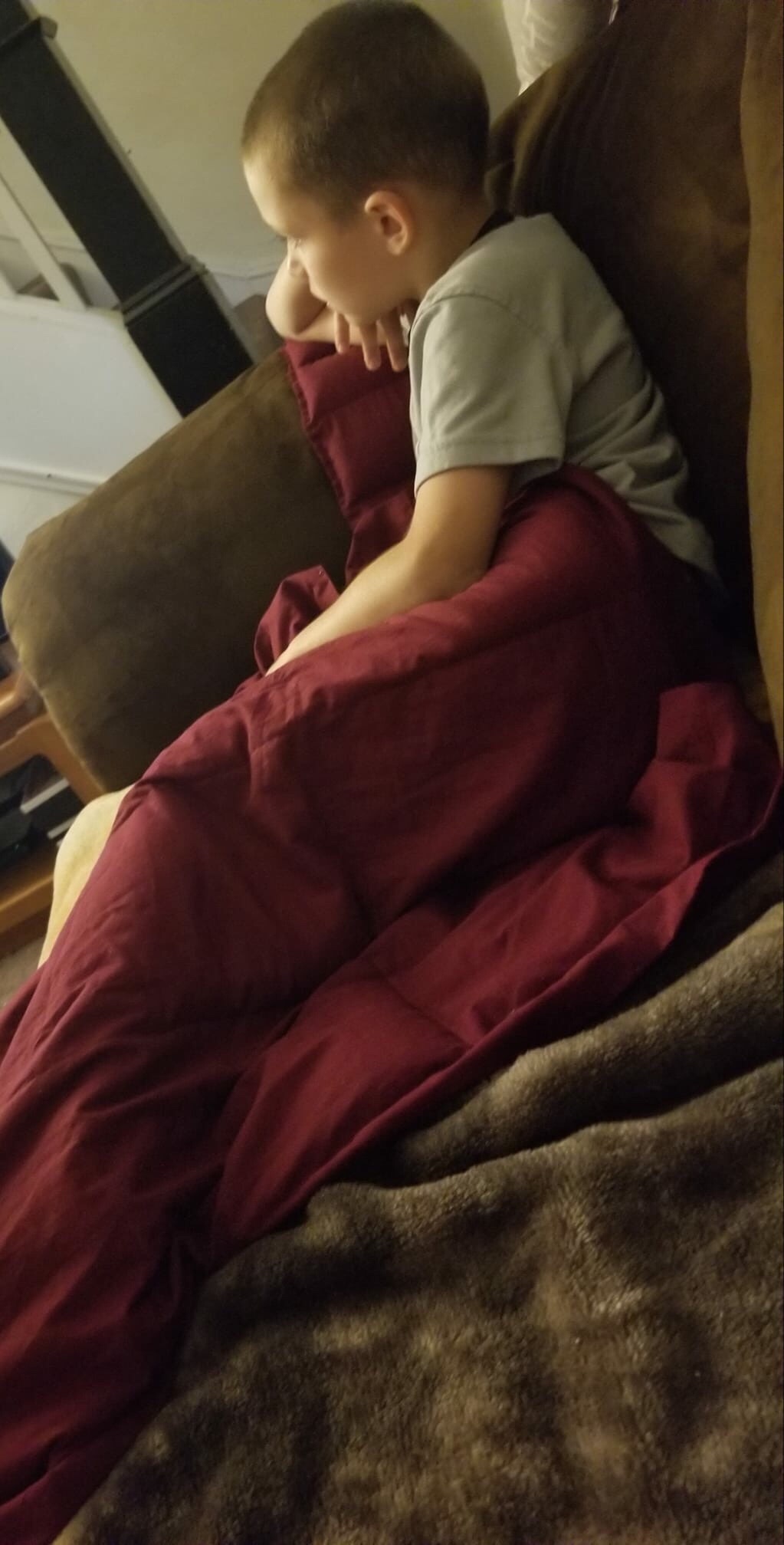
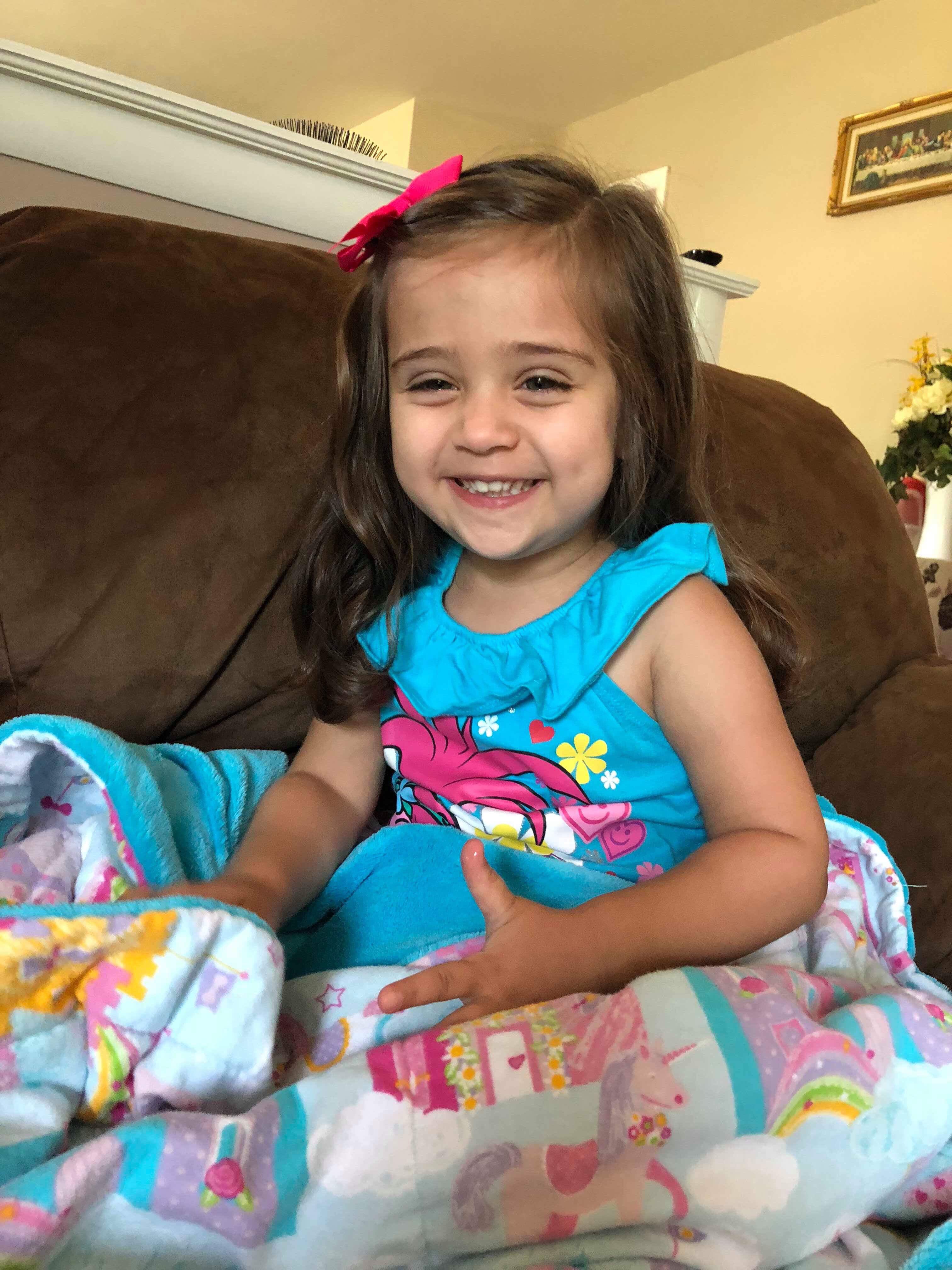
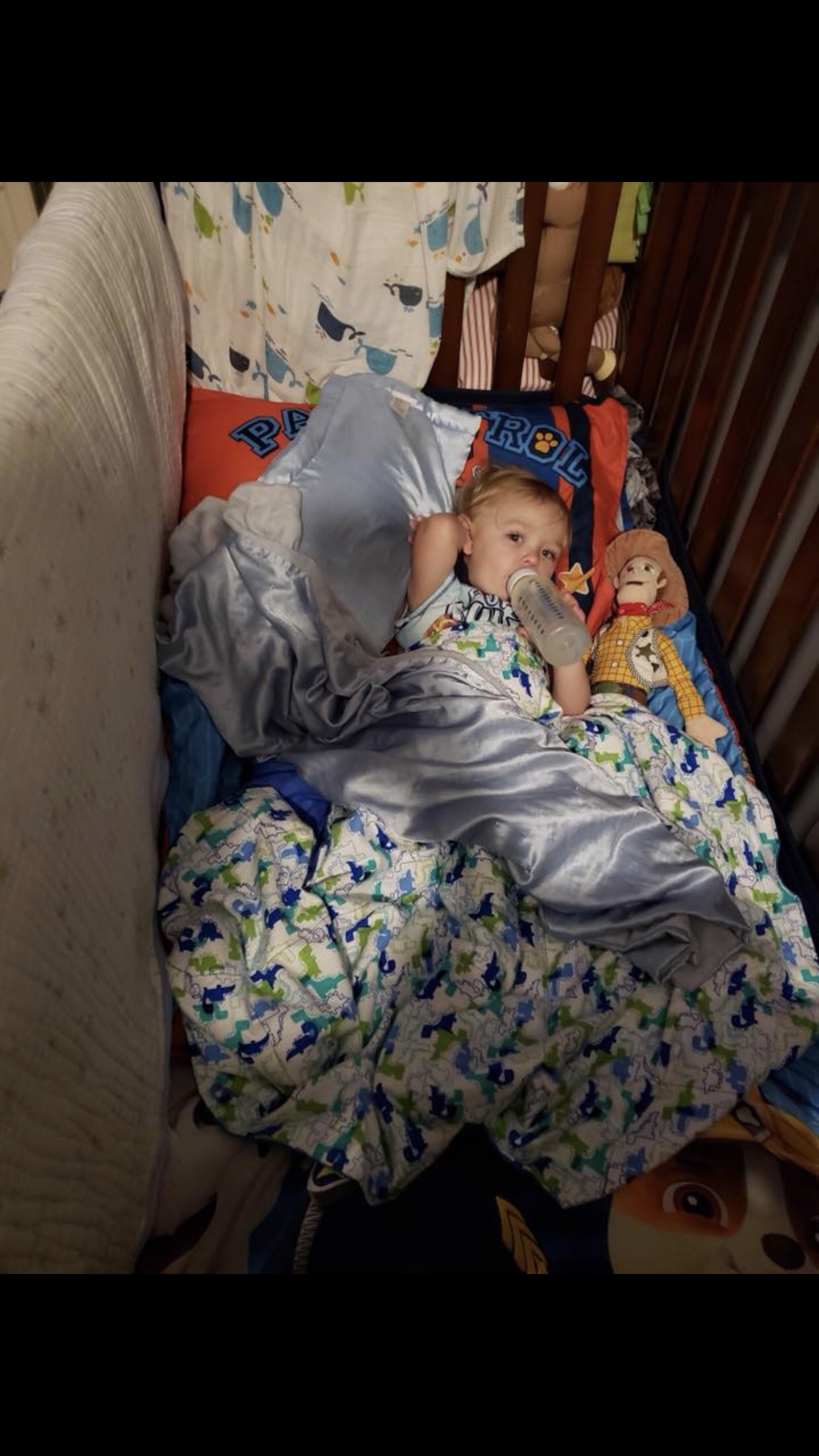
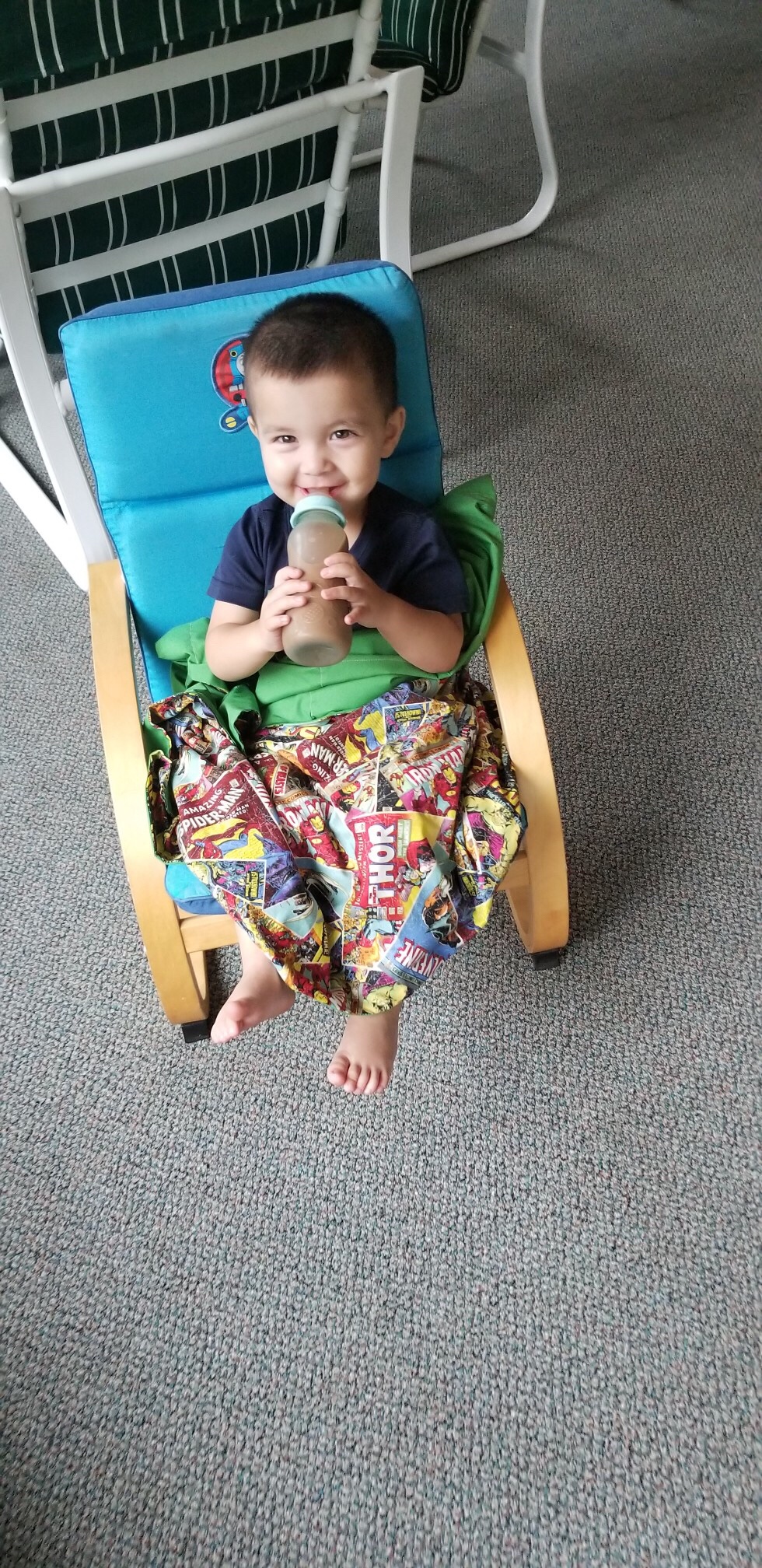
The lap blanket is more convenient for car rides, mealtime and even at the dentist! I use my daughters during medicine time to help keep her relaxed. The larger blanket can help alleviate some of the anxiety a child feels when getting a haircut or sleeping and it can have a nice calming effect.

We also offer a longer shoulder weighted blanket that can double as a lap blanket. You can drape it over the shoulders, putting a nice pressure on them to help relieve stress and anxiety. It can also be folded in half and used on the lap. These types of blankets work great for school-aged children that have a hard time in class.

Weighted blankets vary in size depending on your individual child. The weight is generally calculated up to 10% of the child’s weight. The large blanket starts at $100, lap at $45 and the shoulder/lap blanket starts at $55, depending on fabric and size requested. Please email me at emmabearorg@gmail.com for further questions or to place an order.

BLANKET CARE:

Each blanket is hand crafted with love and care. We inspect each blanket carefully but if you notice any holes or tears, please remove the blanket from your child and contact us immediately to resolve the issue.

All blankets are filled with poly-pellets. They are a non-toxic, hypoallergenic, washable weighted bead made in the USA.

Please be sure to wash your blanket in cold water and hang it to dry. You can tumble dry on low for a few minutes to “fluff” it.

SAFETY GUIDELINES:

*Please consult with a qualified medical professional, such as a doctor or occupational therapist to ensure that a weighted blanket is appropriate for your child. You can also consult them in regards to the amount of weight appropriate for your child.

*As a precaution, weighted blankets aren’t typically recommended for children under the age of 1 or who can’t remove the blanket from themselves without assistance. Once again, please consult a professional before ordering.

*Never let the blanket cover the child’s face/head. Remove immediately if there is any discomfort or distress. The blankets are NEVER to be used as a form of punishment.

Thank you so much for your interest!

Below are some children who have had success with our blankets.

Children with disabilities

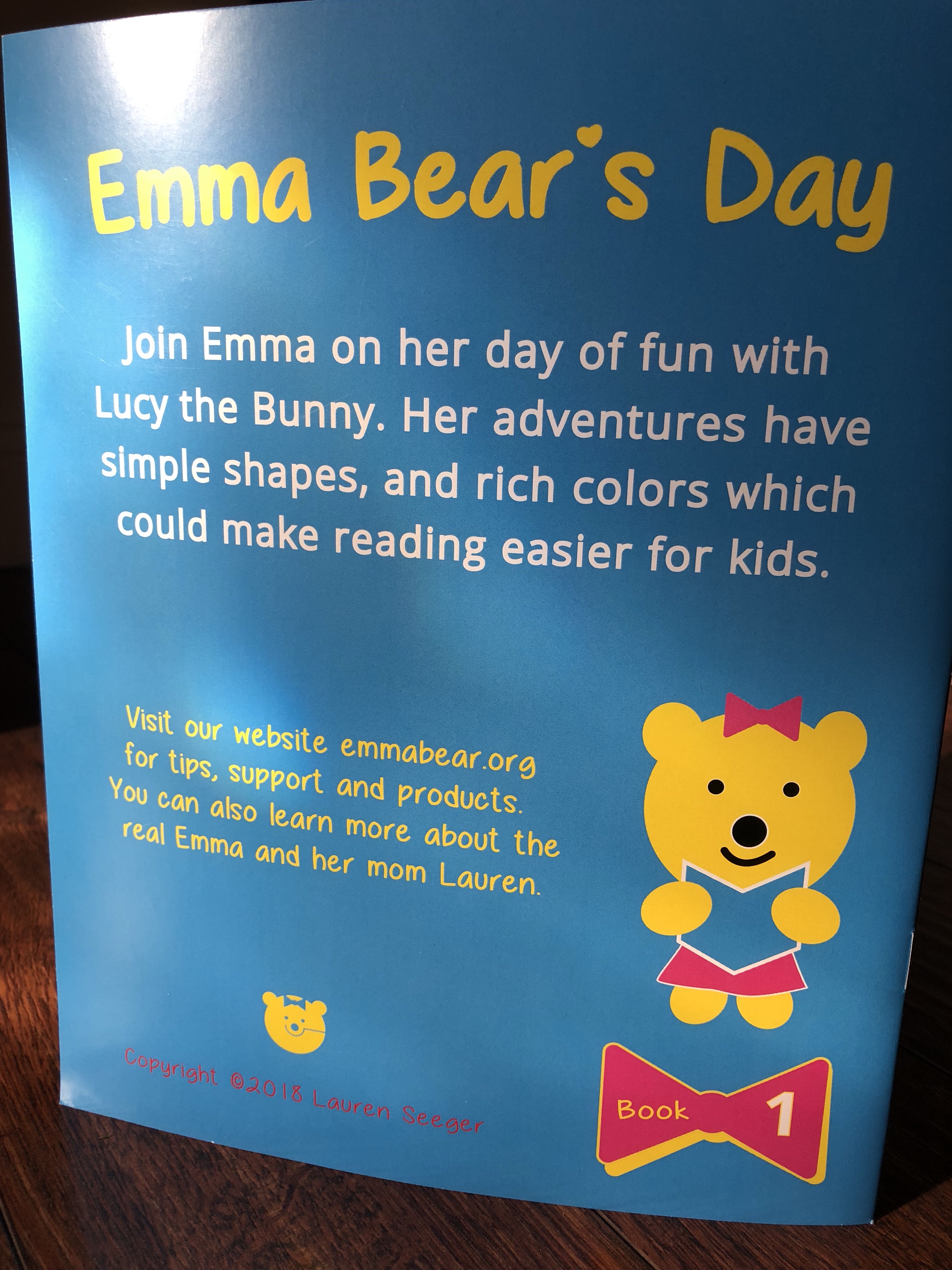
Emma Bear’s Day: A Children’s Book

Emma has cortical visual impairment and we have had a difficult time finding books that were suitable for her, so we decided to create our own children’s book for her and others to enjoy.

Join Emma and her friend Lucy the Bunny throughout their day of fun! Our book is great for children of all ages. The adorable character of Emma Bear will sure to be one of your kids favorites.

It has been suggested that high contrast images can be easier for kids with vision issues to see. Our books have blacked out backgrounds to increase contrast and reflective circles throughout. Details that could make seeing the characters easier for your child. Our book is filled with simple characters and bright colors.

To order your new Emma Bear book, please visit http://emmabear.bigcartel.com. (If outside the US, please email me directly at emmabearorg@gmail.com).

Thank you so much for your order!!❤️❤️

Children with disabilities

Chewing issues?

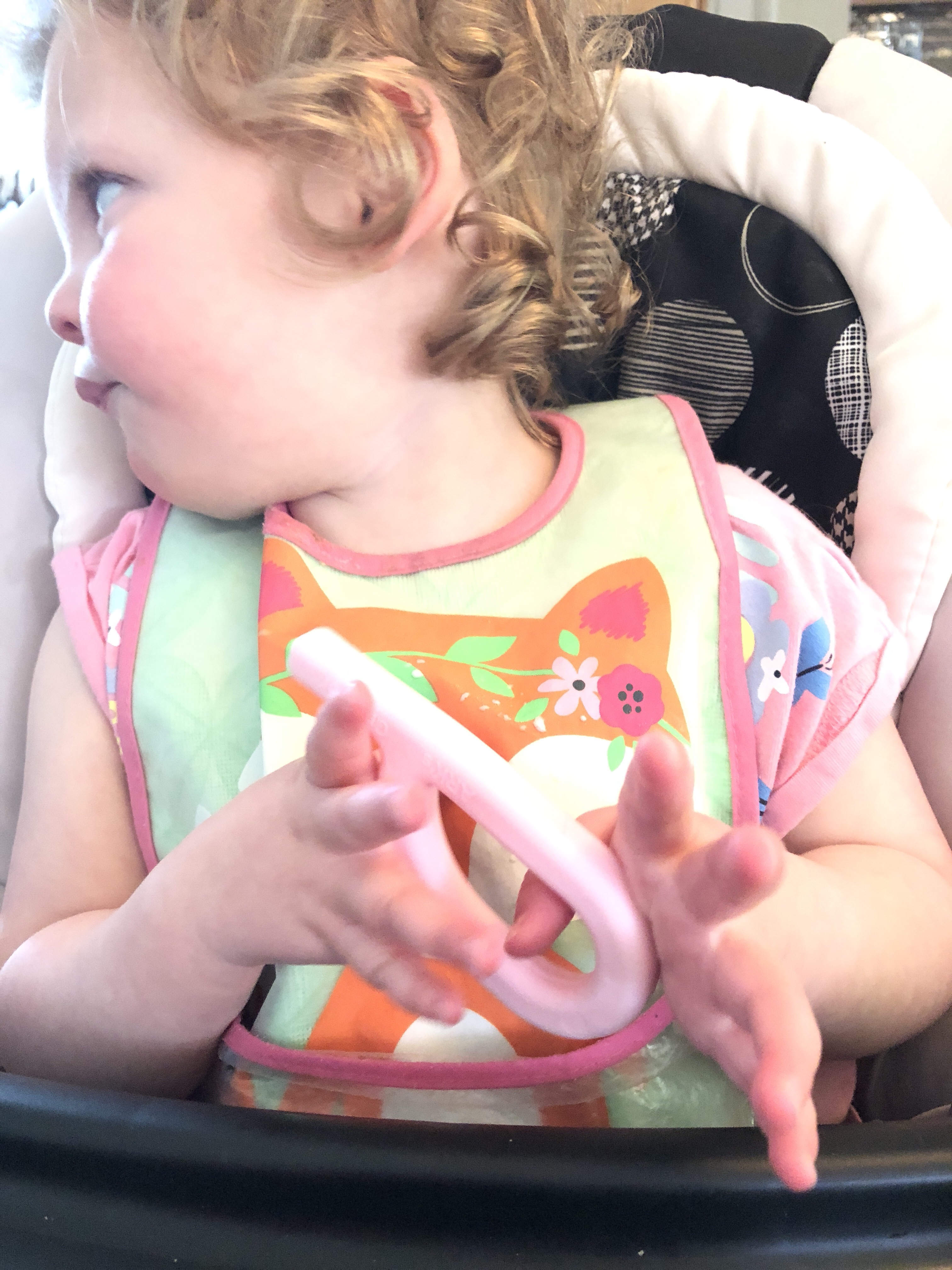
Emma is at the point where she puts everything in her mouth. She is constantly chewing her fingers and toys. I found these awesome new chew toys for oral motor skills plus they stop her from chewing things she shouldn’t. They’re from a company called Ark Therapeutic. All of they’re products are made in the USA and are great quality and price. They have wonderful and friendly customer service as well. Check them out!!

https://www.arktherapeutic.com

Children with disabilities

Hydrocephalus bracelets! Great holiday gifts for a good cause!

Until Emma was diagnosed with hydrocephalus at 22 weeks in utero, I had never even heard of the word and couldn’t even pronounce it. For those of you who don’t know what it is, the exact definition is “a build-up of fluid deep within the cavities of the brain”. It’s also known as “water on the brain”. Emma had a brain bleed and caused a clot at the base of her skull. This allowed for fluid to build in her brain while she was in utero and after birth a shunt was placed to drain the excess fluid. As of now, the only cure for Hydrocephalus is either a shunt or surgery. It’s a diagnosis that can cause many issues and hopefully one day we will find a better solution. Our family wants to help spread awareness about hydrocephalus and have made some bracelets to represent that!

💙🖤🐻the colors represent hydro and the bear is for Emma! Please visit http://emmabear.bigcartel.com to place an order.

THANK YOU!

Children with disabilities

“I’m feeling overwhelmed”…is an understatement.

Do you ever have days where you just feel like you’re going to explode? I don’t think I have any tears left to cry. I feel like if someone looks at me one more time with pity or sorrow I’ll burst. It breaks you and I am not as strong as everyone wants me to be or believes me to be.

The sheer force of stress I’m experiencing and overload of information in the past 3 days is purely indescribable and this is only the beginning.

I want people to understand how I feel and what I’m going through but truth be told, you can’t. Unless you’ve watched your child get stuck with a needle for an IV multiple times to find the right vein, you can’t. Unless you’ve had to watch your child scream and thrash as a nurse shot liquid sodium down their throat, you can’t. Unless you’ve had to pin your child down to prick their tiny toes to test their blood, you can’t. Unless you’ve had to weigh and measure every ounce of liquid and every gram of food/medicine your child consumes, you can’t.

Truth is, I envy you. It’s as simple as that. I would give anything I could to not know what any of this is like. I thought once we were past the NICU and the shunt surgery and the cranio surgery we would be done. I thought the medicine would stop the seizures, it didn’t. I want to cry and run away and curse whatever God I believe in for all of this. How did we get here? Why are we here, at this point? What did we do to have this life? Why does Emma have to suffer and go through any of this? She is innocent in all of this and yet she is the one that must suffer. I don’t understand it. I don’t accept it. I hate it. And I’m jealous of anybody who has not experienced the pain I’m feeling and the sadness and hurt in my heart for my little girl.

People keep telling me we had Emma for a reason and she chose us as her parents. I want to believe that and I know there are children that have it way worse than Emma but can we catch a break here? Can my kid have just a moment of some sort of normalcy? I just want her to know what that’s like. Is that too much to ask?

Children with disabilities

Seizures are rough

Emma’s been taking her max dose of Keppra for over 2 weeks now. Since Sunday, she’s been having 30-40+ seizures a day. The most she’s ever had daily since they started in May. I feel awful for her. We need to get this figured out. I’m hoping after her neurologist checks her blood levels we can adjust back down to a lesser dose. We are also on track to start her Keto Diet next month. There are so many things that go into that as well and it’s a tedious process just to get admitted to the hospital. Trying to stay optimistic because we need this diet to work. I don’t want to introduce any new meds. I just don’t feel like it’s the best thing to do for Emma. I’m feeling very overwhelmed and stressed about everything. I wish Emma didn’t have to go through any of this. It’s so sad but she is amazing and is still progressing despite all of the seizures and setbacks. She’s truly inspirational. She is the reason I want to be the best mom I can be.